
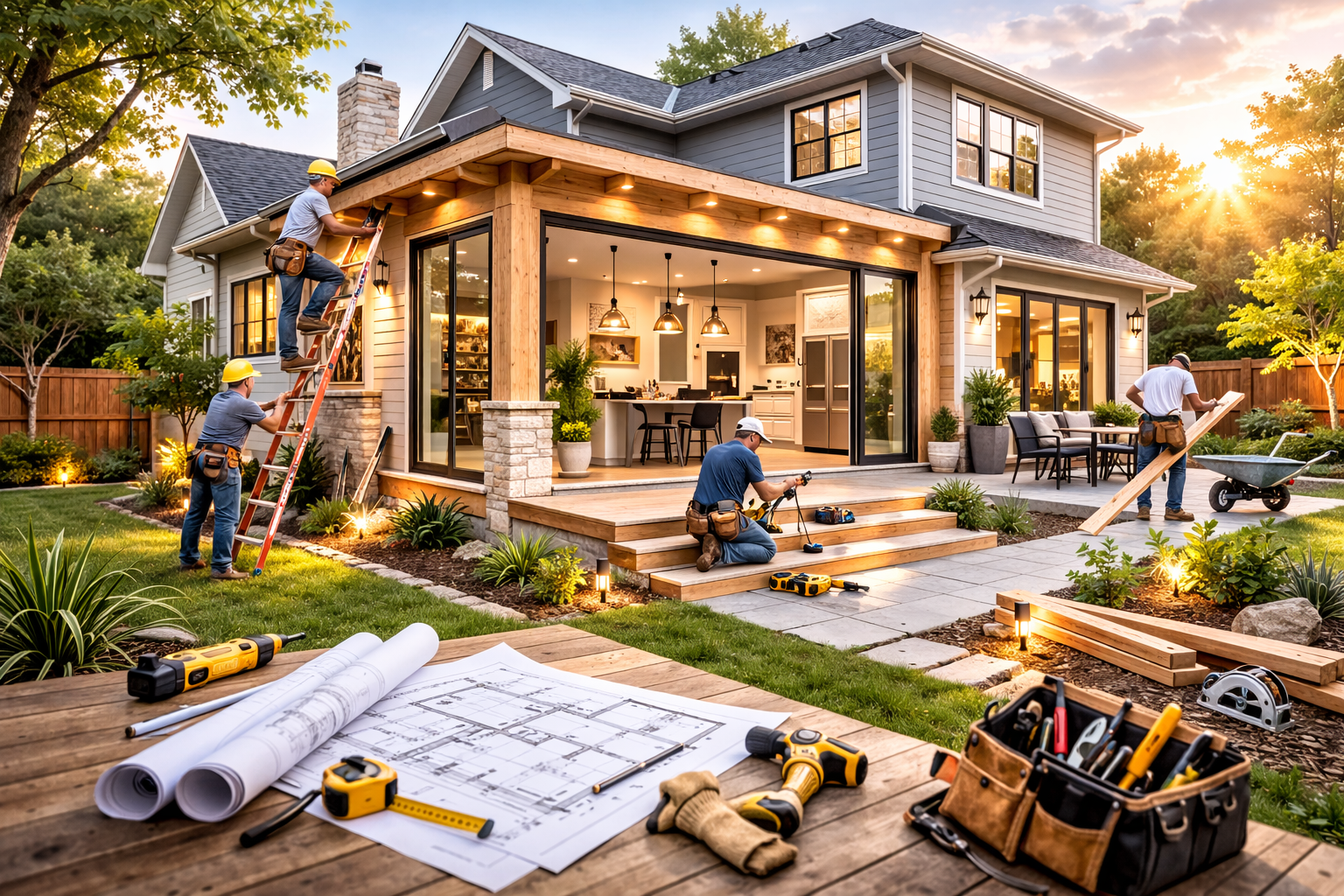
Home values continue to climb in many parts of Texas, and homeowners are asking a practical question: Is home addition a good investment in 2026?
With rising construction costs, higher interest rates, and strong housing demand, adding square footage has become a serious financial decision. For many families, expanding their current home may make more sense than selling and buying something larger.
In 2026, a well-planned home addition can increase property value, improve functionality, and prevent the stress of relocating. But not every addition delivers the same return. The key is strategy.
Why Homeowners Are Choosing Additions Over Moving
Moving comes with major costs: realtor fees, closing costs, higher mortgage rates, and moving expenses. In competitive markets like Austin, upgrading to a larger home can mean paying significantly more for similar square footage.
A home addition allows you to:
- Stay in your current neighborhood
- Avoid high transaction costs
- Customize space exactly to your needs
- Increase property value
- Adapt your home for long-term living
For many families in 2026, expanding makes more financial sense than starting over.
What Types of Home Additions Add the Most Value?
Not all additions are equal in return on investment. The best-performing projects tend to improve usable living space and functionality.
Primary Suite Additions
Adding a spacious master suite with a modern bathroom can significantly increase resale appeal.
Kitchen Expansions
Expanding a kitchen into an open-concept layout remains one of the strongest value-adding upgrades.
Home Office Additions
Remote work is still common in 2026. Dedicated office space continues to attract buyers.
Garage Conversions
Finished garage spaces can add flexible square footage without major structural expansion.
Second-Story Additions
In areas where lot space is limited, building upward maximizes property potential.
Financial Return: What Can You Expect?
A well-designed home addition can return a significant percentage of its cost in increased property value. While returns vary by market and project scope, additions that increase livable square footage often perform strongly in resale evaluations.
Beyond resale value, you must also consider:
- Improved daily comfort
- Long-term functionality
- Reduced need to move
- Increased property appeal
Investment is not only about resale. It is also about lifestyle return.
Construction Costs in 2026
Construction costs have stabilized compared to previous spikes, but labor and materials remain significant factors.
Costs depend on:
- Size of addition
- Structural complexity
- Foundation requirements
- Plumbing and electrical needs
- Finish selections
Working with an experienced remodeling company ensures proper budgeting and cost planning.
Companies like Teamwork Home Designs help homeowners analyze feasibility, zoning requirements, and realistic budgets before construction begins.
When a Home Addition Is NOT a Good Investment
A home addition may not make sense if:
- The home already exceeds neighborhood value limits
- The foundation cannot support expansion
- The addition would disrupt property layout
- The cost significantly exceeds resale potential
A professional evaluation prevents overbuilding for the area.
How Location Impacts ROI
In growing cities like Austin, adding square footage often increases resale value because buyers prioritize larger homes in desirable neighborhoods.
If comparable homes in your area sell for significantly more due to additional space, a home addition can position your property competitively in the market.
Understanding neighborhood price ceilings is essential before beginning construction.
Design Matters More Than Size
Bigger is not always better. Smart design improves flow, lighting, and usability.
A poorly integrated addition can reduce visual appeal and harm resale value. A seamless design that blends with existing architecture strengthens long-term investment potential.
Professional planning ensures the new space feels original to the home rather than added on.
Energy Efficiency and Long-Term Savings
Modern additions allow homeowners to incorporate:
- Energy-efficient insulation
- Updated HVAC systems
- Impact-rated windows
- Improved ventilation
- Sustainable building materials
These upgrades reduce utility costs while increasing property appeal.
Frequently Asked Questions
Is home addition a good investment in 2026 compared to buying a new home?
In many cases, yes. It can be more cost-effective than relocating, especially in competitive markets.
What addition adds the most value?
Primary suites and kitchen expansions typically offer strong returns.
How long does a home addition take?
Most projects take several months depending on size and complexity.
Will a home addition increase property taxes?
Yes, increased square footage may raise assessed value.
How do I know if my home can support an addition?
A professional evaluation determines structural feasibility and zoning compliance.
Final Thoughts
So, is home addition a good investment in 2026? For many homeowners, the answer is yes, if the project is thoughtfully planned, properly designed, and aligned with neighborhood value.
A well-executed addition increases living space, enhances functionality, and strengthens long-term property value. The key is working with experienced professionals who understand design, construction, and market dynamics.
If you are considering expanding your home, the experts at Teamwork Home Designs can guide you through feasibility, budgeting, and construction planning.
Contact Team Work Home Designs today to schedule a consultation and find out whether a home addition is the right investment for your 2026 goals.